For over 150 years, Western medicine has held a dominant position in the Western world, excelling in the treatment of acute conditions but showing limitations when dealing with chronic diseases. This medical approach, often referred to as allopathic medicine, biomedicine, conventional medicine, mainstream medicine, or orthodox medicine, relies on medical doctors and other healthcare professionals such as nurses, pharmacists, and therapists who utilize drugs, radiation, or surgery to address symptoms and diseases. However, this model tends to overlook crucial aspects of patient care, such as the emotional profile, lifestyle, and diet. Additionally, it largely dismisses alternative practices like Frequency Medicine and other energetic approaches to healing. At the cellular level, information exchange occurs through electromagnetic signals, especially in the far infra-red spectrum, in conjunction with biochemical signals and sonic frequencies. Understanding biological complexities and energy-information flow at the atomic level can be approached from the perspective of vibration.
In light of these perspectives, it becomes essential to explore a more comprehensive and integrated approach to medicine that considers all aspects of the patient for optimal healing.
Curiously, the term “healing” is notably absent in the discourse of Western Medicine. Thomas R. Egnew, in an insightful article, succinctly explains the reasons behind this omission: “Healing in a holistic sense has gradually lost significance in medical discussions and finds rare mention in medical literature. The lack of consensus on its meaning reflects the perplexity surrounding healing within the medical field. Strikingly, modern medicine has yet to provide a clear operational definition of healing, leaving it seemingly beyond the bounds of its orthodox principles. As a result, the responsibility of nurturing healing has often fallen upon practitioners of alternative medicine. The absence of an accepted definition for holistic healing within medicine remains an intriguing paradox.
If our bodies are not fundamentally composed of matter, then what shapes our blood, tissues, and bones? The answer lies in energy. What we traditionally perceive as matter is, in reality, the result of atomic and electrical forces binding atoms together.
Quantum Physics has led to groundbreaking discoveries that portray the body as a complex interplay of biofields. These fields are not mere by-products of physiological processes; they represent the means through which the body and mind communicate with each other.
Numerous studies have demonstrated that cells engage in communication through light and sound signals. These energy-information fields interconnect all organs and systems within the body, and their stimulation through light and sound frequencies – known as Frequency Medicine – serves as catalysts to support the body’s innate healing processes, as only the body possesses the ability to heal itself.
In the realm of Holistic Medicine, often referred to as Functional Medicine, practitioners take a comprehensive approach by considering all aspects of the patient, including their emotions. Given that the body comprises vibrational energy, a broad array of vibrational and energetic modalities are available to support the patient’s physiology. Frequency Medicine finds its roots in this context, recognizing the energetic interconnectedness of the mind-body system.
This essential field calls for the support of individuals like you, who can contribute to spreading this newfound knowledge and collectively foster the change needed to heal our world. Joining hands together, each of us adds to the collective wellspring of transformation, propelling us toward a healthier future for all.
Throughout history, ancient cultures have explored the therapeutic potential of sound, leading to the rediscovery of sound therapy and its remarkable applications in treating chronic pain, chronic inflammation, and a diverse range of medical conditions. It is important to note that this form of therapy stands distinct from the therapeutic use of music, musical instruments, and the human voice.
In 1927, Professor R. Wood and his assistant, Alfred Lee Loomis, made a groundbreaking breakthrough by discovering ultrasound (high-frequency sound) and its extraordinary medical properties. This momentous discovery spurred extensive research, and today, medical science unequivocally recognizes the powerful therapeutic benefits of ultrasound. In the realm of destructive ultrasound, exemplified by High Intensity Focused Ultrasound (HIFU), tumors can be ablated or heated, and in Histotripsy, a form of pulsed ultrasound, tumors can be disrupted through acoustic cavitation. Additionally, destructive ultrasound finds application in breaking up kidney stones and brain plaque.
However, ultrasound’s potential goes beyond destruction; it can be utilized constructively to accelerate the healing of soft tissues and mend broken bones, making it a staple in sports injury clinics worldwide. The versatile nature of ultrasound has opened up new vistas in modern sound therapy, presenting a promising frontier for addressing chronic ailments in a harmonious and effective manner.
Sound Therapy is defined by the International Sound Therapy Association as:
“The application of audible sound to the full body or to a specific part of the body, from electronically-generated sound sources, or from musical sources, as therapeutic support, by a credentialed Sound Therapy practitioner.”
This definition clarifies that therapeutic audible sound can originate from either electronic means or a musical source. Pure sound frequencies can be delivered through instruments as simple as a tuning fork as well as sophisticated devices such as a frequency generator.
To understand how sound interacts with our physiology, we delve into the mechanisms of sound transport and its effects on our bodies


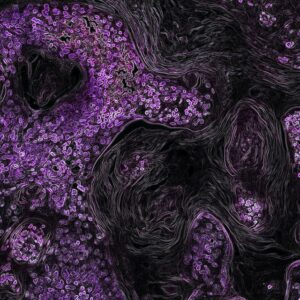
Integral Membrane Proteins (IMPs) and Integrins: Cellular Antennas and Connectors. Integral Membrane Proteins (IMPs) and Integrins play crucial roles in cellular communication and connectivity. IMPs act as antennas, sensitively perceiving the cellular environment and transmitting/receiving signals in the infrared spectrum and sound frequencies (usually centered around 1kHz) from neighboring cells and central control centers. On the other hand, Integrins serve as the binding agents, facilitating cell-to-cell adhesion and connecting cells to the extracellular matrix—a delicate, gossamer-like network that envelops and supports all organs and tissues. Beyond their signaling and connection functions, IMPs also facilitate nutrient uptake and waste excretion within cells. When sound waves permeate the body, they form cymatic patterns on the outer membrane of countless cells. This gentle massaging effect nourishes the IMPs, providing a sonic form of sustenance for cells. A mesmerizing illustration presents itself in the form of a linear train of cymatic patterns on the surface membrane of an Aloe Vera plant cell — a plant renowned for its remarkable ability to promote skin healing when applied topically. This captivating interplay of cellular responses to sound unveils the intricate and profound relationship between sound and cellular health, offering a glimpse into the potential therapeutic applications of sound for enhancing well-being at the cellular level.
Through this captivating example, we gain deeper insights into the wondrous way in which sound influences cellular behavior and vitality. The synergy between cymatic patterns and Aloe Vera’s healing properties evokes a sense of awe at the intricate workings of nature’s healing potential. This realization opens the door to further exploration and appreciation of sound’s potential as a therapeutic tool, encouraging us to harness its power in promoting wellness and rejuvenation, not only in plants but also in the complex microcosm of our own cellular health.
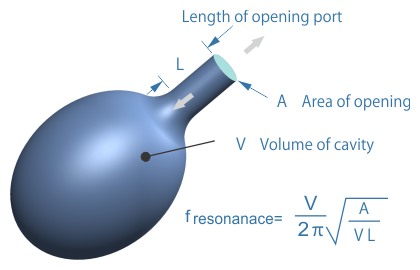
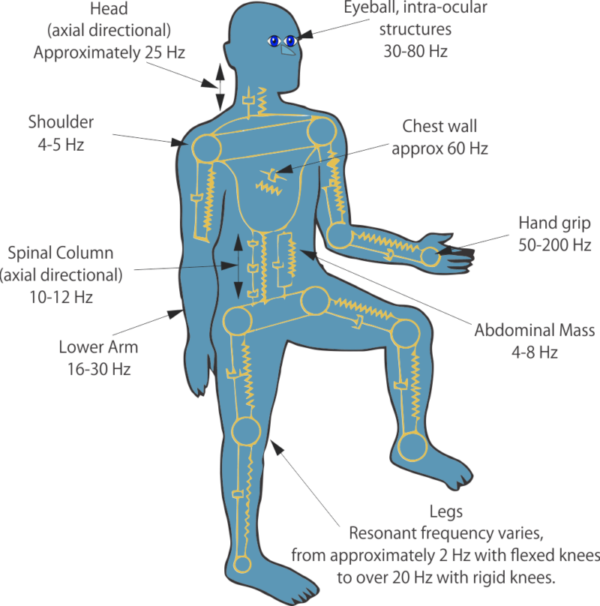
Each body part possesses a unique and innate resonant frequency, commonly referred to as its “eigentone”, “prime mode”, or “prime resonant frequency.” At this particular frequency, an object or body part demonstrates heightened receptivity to energy absorption. Thus, armed with knowledge of the resonant frequency of the affected body part, therapy can be finely tuned and optimized, leading to more effective outcomes. This model of the human body depicts the main organs represented by mass-spring-damper systems, each with its distinct natural excitation frequency. In simple terms, when the body is exposed to vibrations that align with its own frequencies, the organs undergo resonance, causing the vibration magnitudes to amplify.
Resonant frequency of body parts
| Brain: | Body: |
|---|---|
| Delta, 0.1-4 Hz Theta, 4-8 Hz Alpha, 8-12 Hz Beta, 13-20 Hz Gamma, 30-50 Hz | Eye, 20-90 Hz Head, 20-30 Hz Shoulder, 4-5 Hz Chest, 50-100 Hz Spine, 10-16 Hz Abdomen, 4-8 Hz Legs, 2-20 Hz Upper arm, 5-10 Hz Lower arm, 16-30 Hz Hand, 30-50 Hz |

Exploring the Multitude of Biological Mechanisms Stimulated by Pure Sound Frequencies
By targeting the body’s large A-beta fibres or A-alpha fibres in the painful area, sound frequencies can effectively close the pain ‘gate,’ facilitating pain mediation.
Low- frequency sound pressure, ideally below 50Hz, aids in breaking the pain-spasm-pain cycle by enhancing oxygen binding to hemoglobin molecules, resulting in increased availability of oxygen to hypoxic muscles.
Pure sound frequencies assist in increasing the availability of oxygen binding to hemoglobin molecules, fostering tissue repair mechanisms.
Sound frequencies have the potential to stimulate the vagus nerve, offering various health benefits, with Music Medicine providing a more pleasant experience.
Utilizing binaural beats, sound frequencies can entrain brain frequencies, with a more enjoyable outcome when accompanied by music.
Pure sound frequencies can awaken cells in the G0 phase, reinvigorating cellular activity.
Sound frequencies contribute to generating EZ (Exclusion Zone) water within the body’s cells, fostering cellular vitality.
Engaging in ‘sonopuncture,’ sound frequencies activate the meridian (fascia) system, associated with numerous health benefits.
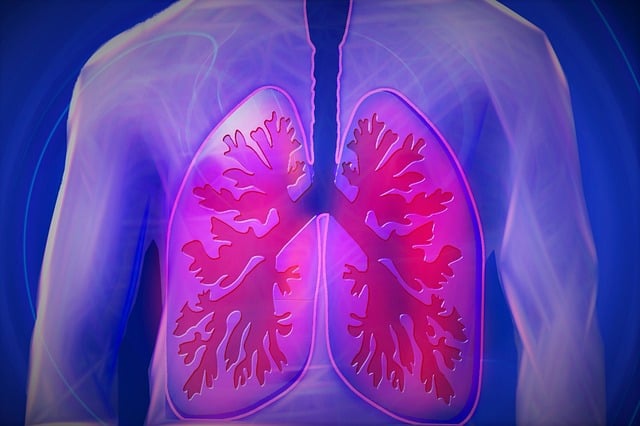
Specific sound frequencies and music actively and passively stimulate the nasal cavities and lungs, leading to increased production of nitric oxide (NO). This phenomenon yields a wide array of health benefits.
Nitric oxide (NO) is a gas molecule that plays a crucial role in various physiological processes within the human body. It is a signaling molecule and a potent vasodilator, meaning it helps to widen blood vessels, allowing for increased blood flow.
Nitric oxide is produced by various cells in the body, including endothelial cells, which line the inside of blood vessels. Nitric Oxide offers a myriad of health benefits, including:
Optimal excitation and production of NO can be achieved by stimulating the paranasal sinus cavities in the range of 1kHz to 2kHz and the lungs in the range of 100Hz to 150Hz. By harnessing the potential of NO through targeted sound frequencies, we open new avenues for enhancing health and well-being, benefiting various physiological processes, and fostering overall vitality.
The decibel range of 70 – 85 dBA is considered ideal for sound therapy due to several key reasons:
Sound therapy aims to promote relaxation, reduce stress, and improve overall well-being. The 70 – 85 dBA range offers enough sound intensity to create a calming and immersive experience without being too overwhelming or causing discomfort.
Sound therapy should be soothing to the ears, and the 70 – 85 dBA range falls within a comfortable listening level for most individuals. It provides an optimal balance between being audible and not causing auditory fatigue.
Within this decibel range, sound therapy can effectively mask unwanted background noises, such as traffic or other environmental disturbances. The masking effect helps individuals focus on the soothing sounds provided by the therapy.
Research suggests that sounds in the 70 – 85 dBA range can stimulate the release of endorphins, the brain’s “feel-good” chemicals, leading to a sense of relaxation and improved mood.
The 70 – 85 dBA range allows for a versatile selection of soundscapes and frequencies to cater to individual preferences and therapeutic needs. Different sound therapies, such as white noise, nature sounds, or binaural beats, can be comfortably administered within this range.
It is important to note that individual preferences for sound therapy may vary, and some people may find different decibel ranges more suitable for their specific needs. However, the 70 – 85 dBA range serves as a generally recommended and effective starting point for sound therapy interventions due to its ability to create a tranquil and therapeutic environment.
Sacred Innovations, your premier destination for precision instruments designed for sound therapy.
Copyright sacredinnovations.ca © All rights reserved