
-
 Canadian dollar
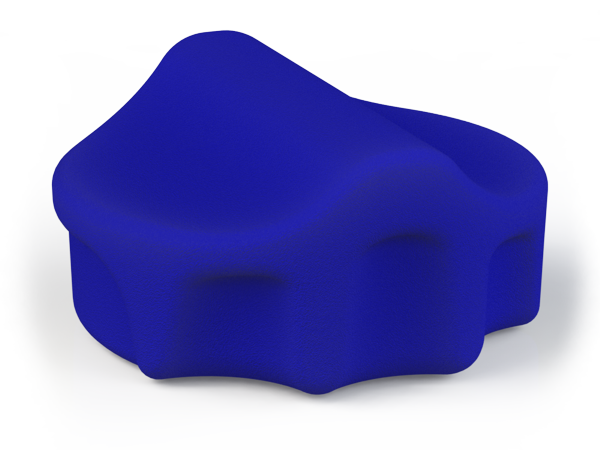
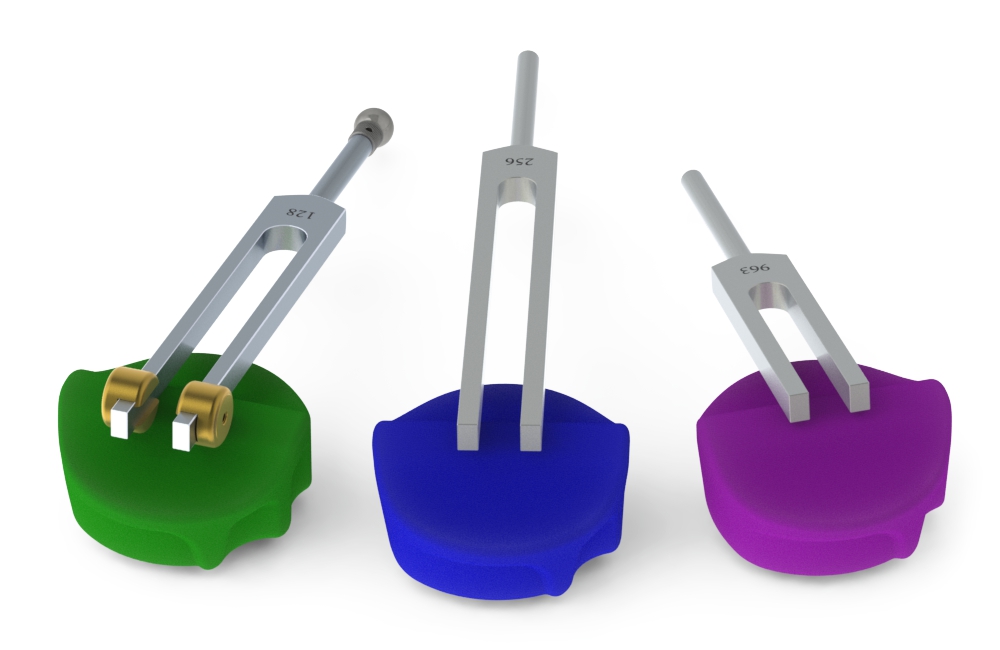
Engineered for Resonance.
Designed for Tuning Forks.
The first purpose-built silicone activator developed specifically to optimize tuning fork performance.
Tuning forks are precision instruments, yet the activators used with them are often an afterthought. Our activator was designed from the ground up as a true acoustic interface that helps your tuning forks perform at their highest potential.
Despite the precision and craftsmanship found in quality tuning forks, surprisingly few activators on the market have been specifically engineered for tuning fork performance. Most commonly available options are hockey pucks or repurposed industrial rubber products, laboratory stoppers, furniture pads, or other generic elastomer items that were never designed for acoustic activation. While they may function to some degree, their hardness, rebound behavior, damping characteristics, and impact geometry are not optimized for this application, resulting in inconsistent energy transfer, reduced sustain, excessive damping, and unwanted impact noise. Our activator was developed from the ground up as a true acoustic interface between the hand and the tuning fork. By carefully controlling silicone formulation, rebound resilience, compression behavior, and strike geometry, it delivers a more efficient and repeatable impulse that preserves the fork’s natural resonance, enhances sustain, minimizes unwanted overtones, and provides a cleaner, more coherent vibrational response. The result is an activator designed not merely to strike a tuning fork, but to help it perform at its highest potential.
| Generic Rubber Products | Purpose-Built Activator |
|---|---|
|
|
A tuning fork responds to the quality of the strike. When the activator absorbs too much energy, the fork sounds weaker and decays more quickly. When it is too hard, it can introduce harsh overtones and unwanted impact noise. Generic products were never engineered with these acoustic requirements in mind.
The Science Of Resonance
A tuning fork produces sound through controlled vibration. The moment of activation determines how efficiently that vibration begins.
Think of the activator as a mechanical bridge between your hand and the fork:
The ideal activator must do three things simultaneously:
If the material is too soft, it behaves like a shock absorber and dampens the vibration. If it is too hard, it behaves more like a hammer and excites unwanted higher-frequency modes. By balancing hardness, rebound, and damping, our activator helps the fork produce a cleaner fundamental tone with longer sustain and a more coherent vibrational response.
Why This Design Is Different ?
Every aspect of this activator was selected for acoustic performance:
Platinum-Cure Silicone – Premium medical-grade silicone with stable mechanical properties and excellent aging resistance.
Controlled Rebound Resilience – Engineered to return energy efficiently without creating harsh transients.
Low Compression Set – Maintains its shape and feel even after thousands of impacts.
High Tear Resistance – Resists splitting and edge damage from repeated fork strikes.
Convex Strike Surface – Promotes smooth, consistent contact and cleaner impulse transfer.
Stable Performance Over Time – Temperature-resistant, durable, and designed for professional daily use.
Odor Free Material – Made from a high-quality material that is free from the strong, unpleasant odors often associated with some rubber products.
Skin Contact Safe – Silicone is widely recognized for being gentle on the skin and is generally non-irritating for most users.
These features result is an activator that is pleasant to use, feels controlled in the hand, and sounds noticeably cleaner.
A tuning fork activator is held and used repeatedly, often for extended sessions. Yet many generic rubber products were never designed with human ergonomics in mind. Flat industrial stoppers and repurposed rubber pads can feel awkward in the hand, require unnecessary grip force, and encourage inconsistent striking technique.
Our activator was designed around the natural resting shape of the hand. The familiar hockey-puck profile is enhanced with a sculpted grip geometry that allows the index, middle, and ring fingers to settle into their own recessed grip region, creating a secure and repeatable hold with less gripping effort. At the same time, the thumb and little finger support a surrounding ledge, helping stabilize hand position during activation. This five-point support arrangement distributes pressure more evenly across the hand, reduces the tendency to squeeze tightly, and promotes a relaxed, balanced grip that remains stable throughout repeated use.
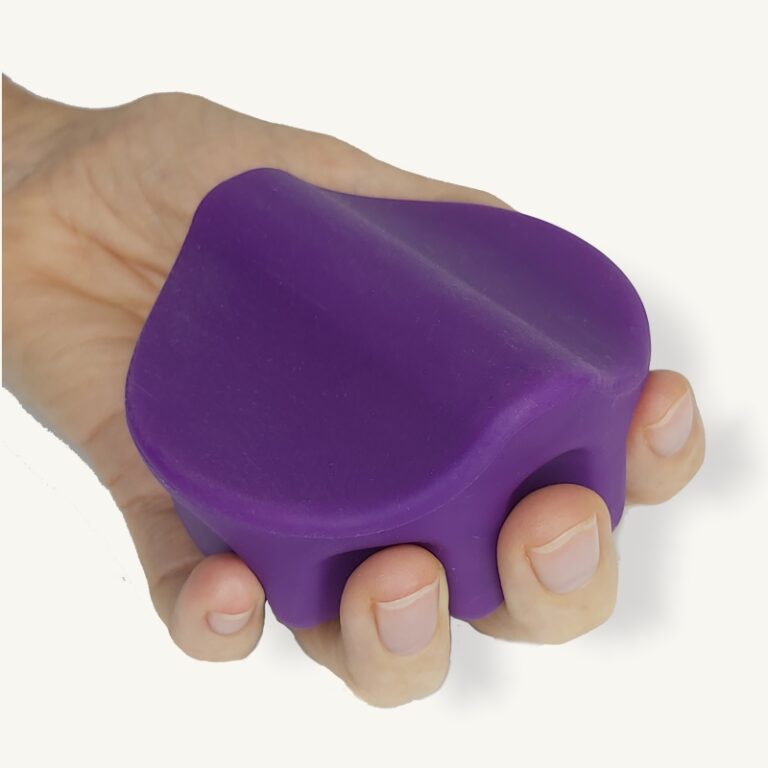
Why Ergonomics Matters
A relaxed hand is not only more comfortable—it is also more effective acoustically.
When grip tension is reduced:
By supporting a neutral hand position, the activator helps maintain a repeatable strike from one activation to the next.

Benefits In Professional Use
Practitioners who use tuning forks throughout the day often notice:
The ergonomic design therefore contributes to both user comfort and acoustic performance. It allows the hand to remain relaxed while the activator delivers a controlled, efficient impulse to the tuning fork, helping each strike feel more natural and consistent. Although the design is sculpted specifically for the human hand, the base of the activator remains flat, allowing it to rest securely on a table or any other flat surface. This keeps your hands free when desired and makes it easy to activate two tuning forks simultaneously during advanced therapeutic or professional applications.
Because those products were designed for sports, sealing, cushioning, or industrial purposes, not acoustic activation. Their rebound and damping characteristics are unknown and often inconsistent.
Platinum-cured (also called addition-cure) silicone is silicone rubber that cross-links through a platinum-catalyzed reaction. This process leaves very few residual by-products in the finished material, resulting in a cleaner and more stable silicone.
Yes. They are compatible with virtually all tuning forks.
The Medium (blue) version is the best starting point for most users.
Yes. Hardness influences impulse duration, overtone excitation, and perceived tonal character.
With normal professional use, it is designed for a very long service life and significantly greater durability than typical repurposed rubber products.
Yes. Wipe with isopropyl alcohol or mild soap and water and allow it to dry completely.
Compared with common repurposed rubber products, users typically notice:
These improvements arise from controlled rebound behavior and reduced energy loss during impact.
“The fork speaks immediately.”
“Less harshness at activation.”
“More consistent from strike to strike.”
“A noticeably cleaner resonance.”
“It feels like the fork is being activated rather than hit.”
The most common feedback is not that the fork becomes louder, but that it sounds cleaner, smoother, and more coherent.
“I’ve been using tuning forks for years and, for the longest time, I just used a hockey puck to activate them. It did the job, but honestly, I always thought there had to be something better out there.
Then I tried this activator and immediately thought, ‘Finally!’ It’s so simple and easy to use, and it makes activating the tuning forks feel effortless. The design just makes sense, and you can tell it was actually made with tuning fork users in mind.
I’m honestly surprised it took this long for someone to come up with something like this. After years of using a hockey puck, it’s pretty amazing to finally have a tool that’s actually optimized for activating tuning forks. I absolutely love it!”
J.S. Edmonton, Alberta, Canada
Best for practitioners seeking the softest, most calming activation feel.
If you own a variety of weighted and unweighted tuning forks, this is the recommended starting point.
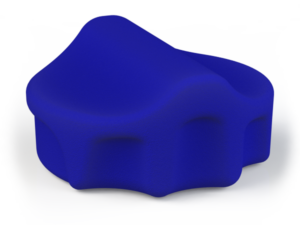
Best when maximum responsiveness and clarity are desired. Best suited to higher frequency unweighted tuning forks.
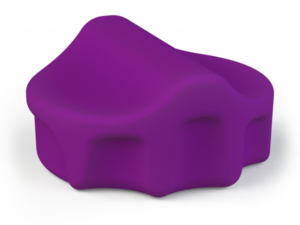
This activator was developed using acoustic engineering principles, professional practitioner feedback, and material-performance criteria typically reserved for industrial elastomer design. It was created to solve a problem that has long been overlooked in the tuning fork world.
A tuning fork can only resonate as well as it is activated. Replace the generic rubber accessory with a purpose-built acoustic tool designed specifically for resonance, sustain, and consistency.

Sacred Innovations, your premier destination for precision instruments designed for sound therapy.
Copyright sacredinnovations.ca © All rights reserved